
Need a Dupixent lawsuit attorney?
Call Now: (888) 510-9256
Hotline Open 24 Hours
Dupixent lawsuits claim anti-inflammatory drug-makers failed to protect patients from cancer. The medication has been blamed for many eczema and asthma patients developing cutaneous T-cell lymphoma.
As such, our Dupixent lawyers are filing CTCL cancer lawsuits for inflammation drug victims.
Dupixent Lawyers Advocate for T-Cell Cancer Victims
Our team of Dupixent attorneys has represented thousands of victims of dangerous pharmaceutical products. In doing so, we have recovered millions of dollars in settlement funds on their behalf.
However, we only pursue compensation from Dupixent manufacturers and affiliates, and do not file claims against our clients’ doctors or hospitals.
No Legal Fee Unless You Obtain a Settlement
While compensation may be available to qualified Dupixent claimants, victims are urged to act promptly. The #1 claim Dupixent victims can make for cancer compensation is one filed within the Statute of Limitations. Follow this link for our latest information on Dupixent multi-district litigation (MDL).
Our Dupixent lawyers are available to review claims now. We offer a free case evaluation to confirm use of Dupixent and diagnosis of a related cancer. Further, we never charge a legal fee unless a financial recovery is obtained for our client.
Get your free Dupixent lawsuit review.
Dupixent Cancer FAQs: Answered by Lymphoma Attorneys
Dupixent lawsuits claim the biologic medication Dupilumab caused or worsened Cutaneous T-Cell Lymphoma (CTCL) and related cancers. Patients now seek experienced Dupixent lawyers to handle claims involving Dupixent lymphoma, Mycosis Fungoides, and Sézary syndrome. This guide provides verified medical and legal information for individuals researching Dupixent cancer lawsuits.
🩸 What Is Dupixent?
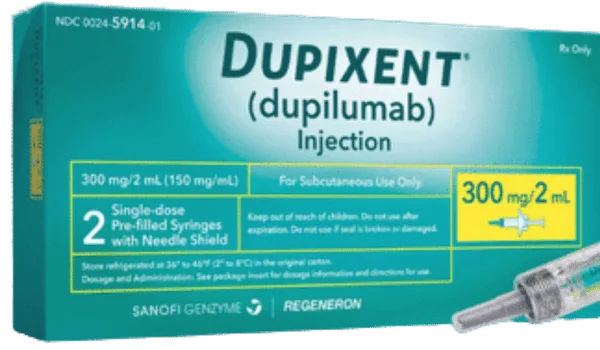
Dupixent (generic name dupilumab) is a monoclonal antibody therapy. It blocks interleukin-4 (IL-4) and interleukin-13 (IL-13) signaling to reduce inflammation. The FDA approved Dupixent for eczema, asthma, sinusitis with nasal polyps, and eosinophilic esophagitis.
Dupixent’s Mechanism
Dupixent inhibits Th2 cytokine pathways, altering immune balance and potentially affecting T-cell behavior.
⚖️ Why are Dupixent lawsuits being filed?
Dupixent lawsuits allege Sanofi and Regeneron failed to warn about cancer risks. Plaintiffs claim the drug triggered or accelerated T-cell lymphomas, including CTCL, Mycosis Fungoides, and Sézary syndrome. Dupixent cancer lawyers argue the companies ignored clinical red flags in early studies and post-market data.
Key Allegations of Dupixent Lawsuits
-
Failure to warn of lymphoma risk.
-
Concealment of adverse-event data.
-
Inadequate safety monitoring.
-
Misleading marketing about safety.
🔬 What Is Cutaneous T-Cell Lymphoma (CTCL)?
CTCL is a rare non-Hodgkin lymphoma that begins in skin-homing T-cells. Symptoms often mimic eczema: scaly plaques, redness, or lesions. Over time, CTCL may progress to involve lymph nodes or internal organs.
CTCL Subtypes
-
Mycosis Fungoides (MF) – slow-growing skin-limited lymphoma.
-
Sézary Syndrome (SS) – aggressive variant with malignant T-cells circulating in blood.
⚠️ Does Medical Evidence Link Dupixent and CTCL?
Yes, recent studies show a link between Dupixent use and increased CTCL incidence.
-
A 2024 meta-analysis found CTCL risk elevated 4.59-fold among Dupixent users. (PMCID: PMC11635927)
-
Case reports describe rapid progression of Mycosis Fungoides after Dupixent initiation. (PubMed ID: 34939237)
-
The FDA Adverse Event Reporting System (FAERS) lists over 250 lymphoma cases among Dupixent users.
Scientific Hypotheses
-
Dupixent suppresses Th2 cytokines, possibly unmasking latent CTCL misdiagnosed as eczema.
-
Blocking IL-4/IL-13 may shift immune balance toward malignant T-cell expansion.
-
Chronic immune modulation can impair tumor surveillance mechanisms.
👩⚖️ Who Qualifies for a Dupixent Cancer Lawsuit?
You may qualify if:
-
You used Dupixent for eczema, asthma, or sinusitis.
-
You developed CTCL, Mycosis Fungoides, or Sézary syndrome.
-
Your diagnosis occurred after beginning Dupixent therapy.
Eligibility Considerations
-
Confirmed biopsy proving T-cell lymphoma.
-
Medical timeline linking Dupixent start to disease onset.
-
No prior CTCL or lymphoma history.
⚕️ What Are the Symptoms of Dupixent-Linked CTCL?
Common warning signs include:
-
Persistent or worsening skin rashes.
-
Red or scaly plaques not responding to eczema treatment.
-
Itching, night sweats, and fatigue.
-
Enlarged lymph nodes or new tumors on skin.
Early misdiagnosis often delays proper treatment, increasing harm.
⚖️ What Legal Theories Support Dupixent Cancer Lawsuits?
Dupixent lawyers rely on several legal grounds:
-
Failure to Warn: Manufacturers ignored known cancer signals.
-
Negligence: Inadequate safety testing or post-market monitoring.
-
Misrepresentation: Promoting Dupixent as “safe” despite internal concerns.
-
Breach of Warranty: Implying safety that evidence later contradicted.
-
Design Defect: Immunologic mechanism capable of inducing malignancy.
🧪 What Evidence Strengthens a Dupixent Lawsuit?
Strong evidence includes:
-
Dermatology records and pathology reports.
-
Biopsy slides showing atypical T-cell proliferation.
-
Dupixent prescription records.
-
Timeline proving symptom onset after drug initiation.
-
Expert opinions in oncology, immunology, and dermatopathology.
Dupixent cancer lawyers often perform secondary pathology reviews and engage toxicologists for mechanism analysis.
🏛️ What Defenses Do Drug Manufacturers Sanofi and Regeneron Use?
Sanofi and Regeneron argue:
-
Dupixent did not “cause” CTCL but revealed a preexisting condition.
-
FDA labeling met regulatory standards.
-
CTCL arises spontaneously and remains rare.
-
Statistical data lack causal certainty.
Dupixent lawyers counter these claims with emerging case data and mechanistic proof of immune-driven proliferation.
🧬 What Biological Mechanisms Explain Dupixent Lymphoma?
Research suggests Dupixent can disturb immune homeostasis.
-
Blocking IL-4/IL-13 may suppress Th2 balance, allowing malignant Th1/Th17 expansion.
-
Long-term cytokine inhibition may impair tumor surveillance.
-
Chronic IL-13 blockade could alter epidermal immune signaling, fostering clonal T-cell evolution.
These findings support causation arguments in Dupixent lymphoma lawsuits.
📊 What Do Eczema/Asthma Clinical Studies Report?
-
2024 Journal of the American Academy of Dermatology: Observed elevated CTCL incidence among Dupixent-treated patients.
-
2023 Case Series (Japan): Found rapid Sézary progression in three patients on Dupixent.
-
2022 FAERS Analysis: Highlighted disproportionate lymphoma signal for Dupilumab vs other biologics.
Such data reinforce the need for Dupixent cancer litigation to demand transparency.
💼 How Do Dupixent Lawyers Build a Case?
Dupixent lawyers perform:
-
Medical chronology reconstruction.
-
Expert witness recruitment in oncology and immunology.
-
Statistical analysis of post-market data.
-
Legal discovery into internal Sanofi/Regeneron communications.
-
Filing under state and federal product liability laws.
They aim to prove failure to warn and negligence caused preventable harm.
💰 What Damages Can Dupixent Cancer Victims Recover?
Plaintiffs in Dupixent cancer lawsuits may recover:
-
Medical and hospitalization costs.
-
Future oncology care.
-
Pain, suffering, and emotional distress.
-
Loss of earning capacity.
-
Wrongful-death damages if applicable.
Punitive damages may apply for deliberate concealment of risks.
⚖️ What Is the Current Status of Dupixent Litigation?
As of late 2025:
-
No centralized MDL exists yet.
-
Several firms actively file Dupixent lymphoma lawsuits nationwide.
-
FDA and legal analysts monitor ongoing safety-signal investigations.
-
Class-action filings remain possible if case numbers increase.
Follow this link to view our complete Dupixent MDL update.
🩺 What Should Dupixent Patients Do Next?
-
Request complete dermatology and pathology records.
-
Preserve biopsy slides for re-examination.
-
Discuss risks with your physician before discontinuing Dupixent.
-
Contact a Dupixent lawyer for case evaluation.
Prompt legal action protects rights under state limitation laws.
🧑⚖️ How to Find the Right Dupixent Cancer Lawyer
Look for attorneys with:
-
Experience in pharmaceutical litigation and cancer torts.
-
Medical-legal teams with oncology expertise.
-
Access to scientific databases and expert witnesses.
-
Transparent contingency fee structure.
Trust-based relationships matter in complex Dupixent cancer lawsuits.
🔍 References & Scientific Sources
-
PMCID: PMC11635927 – Dupilumab-Associated Risk of Cutaneous T-Cell Lymphoma, published by the National Institute of Health.
-
PubMed ID: 34939237 – Case Reports of Mycosis Fungoides Progression After Dupilumab. PubMed
-
FDA FAERS Database – Dupixent Adverse Event Reports, 2024 Update. Nature
-
Dermatology Advisor, July 2024 – Dupilumab and Elevated CTCL Reports. Dermatology Advisor